Unstated Cruxes in Migration Debates
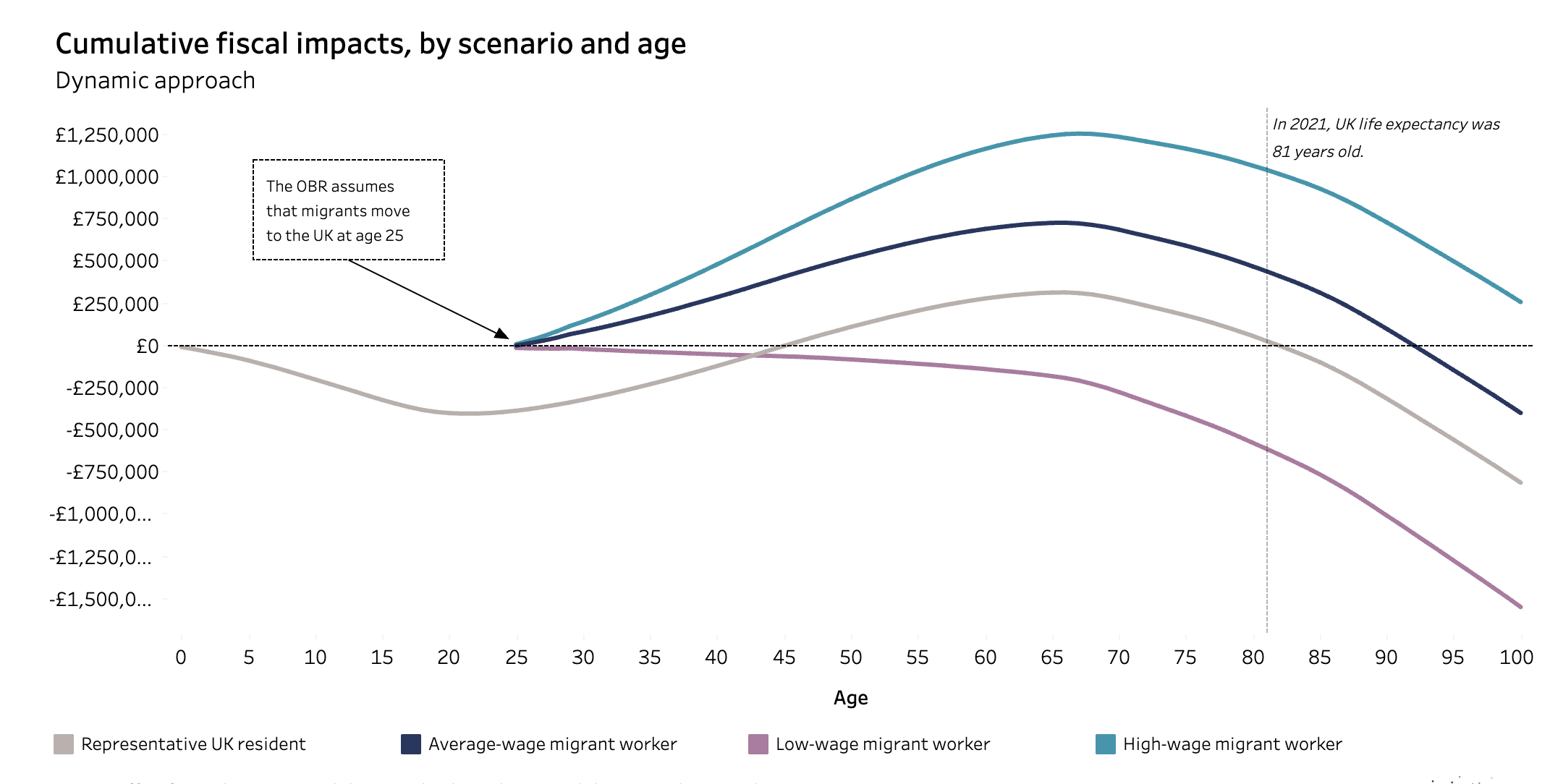
Migration is a fairly big issue. Let's say you have a fairly simple questions. "Are migrants net positive to the economy". This is actually surprisingly hard to say. Your first instinct may be to look at data on migrant employment rates, average incomes, crime etc... e.g: This report from the oxford migration observatory shows the cumulative fiscal impact by age of various migrant groups.
Maybe you slice the data differently. Instead of slicing by age and wage, you can slice by origin. e.g: this fairly famous breakdown for Denmark's immigration with this graph
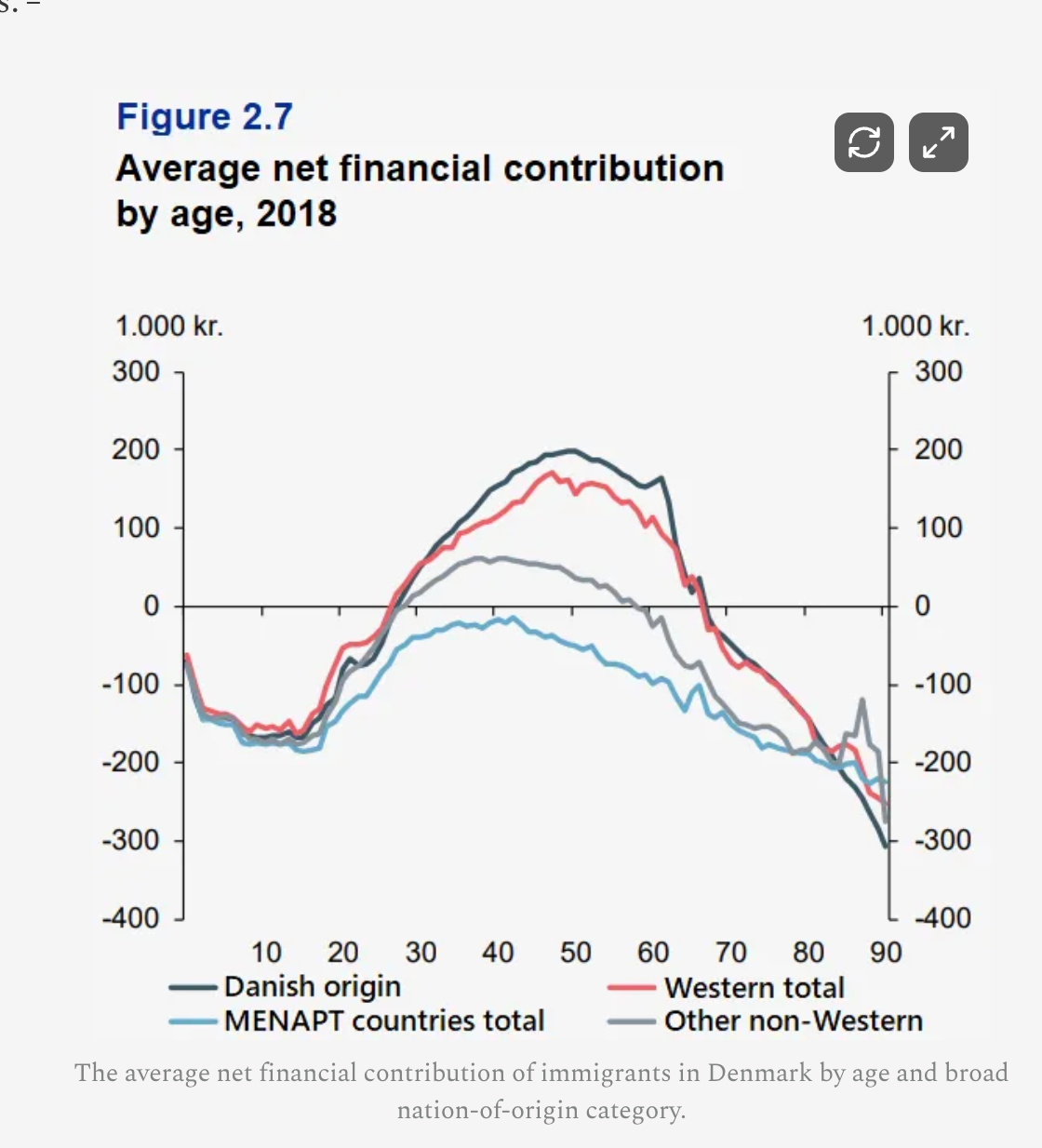
At this point you it's tempting to say something like "Okay. Allow in only high wage immigrants from first world nations". I think this is a reasonable position, but again it get's trickier. There are a fair few other cruxy questions you probably need to think about
- How "innate" are the performance profiles of migrants. Will low wage/MENAPT migrants assimilate over time and converge to native levels or not? Typically if you believe in the Deep Roots literature and people like Garret Jones (Hive Mind, The Culture Transplant) you think they won't. Ditto if you believe in strong hereditarianism/race realism. On the other hand if you think culture is more driving (e.g: Bryan Caplan, The Case for Open Borders) you think convergence is inevitable.
- Is it the average you want to look at or is it the bottom/top of the distribution that's more important? Maybe one Jensen Huang is enough to outweigh 10'000'000 unproductive low wage migrants. On the other hand maybe it's the bottom that matters more and 1% of a group being career criminals imposes a massive social cost.
- How much do you value the wellbeing of immigrants vs natives? How do you think the state should trade them off? If moving a person from the Congo to Belgium is net bad for Belgians but much more good for the Congolese migrant, should we do it? At what ration should we trade of these utilities?
- What are the non-fiscal, indirect effects of migration? This is somewhat related to 1, but can be different. Basically, do you think the state/culture/institutions are robust or that they will be changed substantially by the arrival of migrants with different cultures. To the extent that they do change, is this change bad?
- What about fertility? Kids (assuming they become productive eventually) seems to be the most important driver of long term fiscal solvency. Is a migrant with below average econ contribution individually but higher fertility actually contributing more than a native who makes 30% higher wages but doesn't have kids?
So yeah. I guess my view on migration is that even when you strip away a lot of the social desirability bias and start looking at the raw data, most of the blogs I read tend to be a bit too simplistic. There are a fair few fairly tricky questions you need to have an opinion in order to come to a high-confidence view.
Member discussion